Food supplement. Not a medicine. Sold by Brelvan Health Ltd, Liverpool, United Kingdom. · Disclaimer

Sleep and wellbeing · 24 September 2026

Sleep Deprivation and Immune Response — What Studies Show

Editorial team, Brelvan. How sleep research measures the relationship between rest, routine and immune signals.

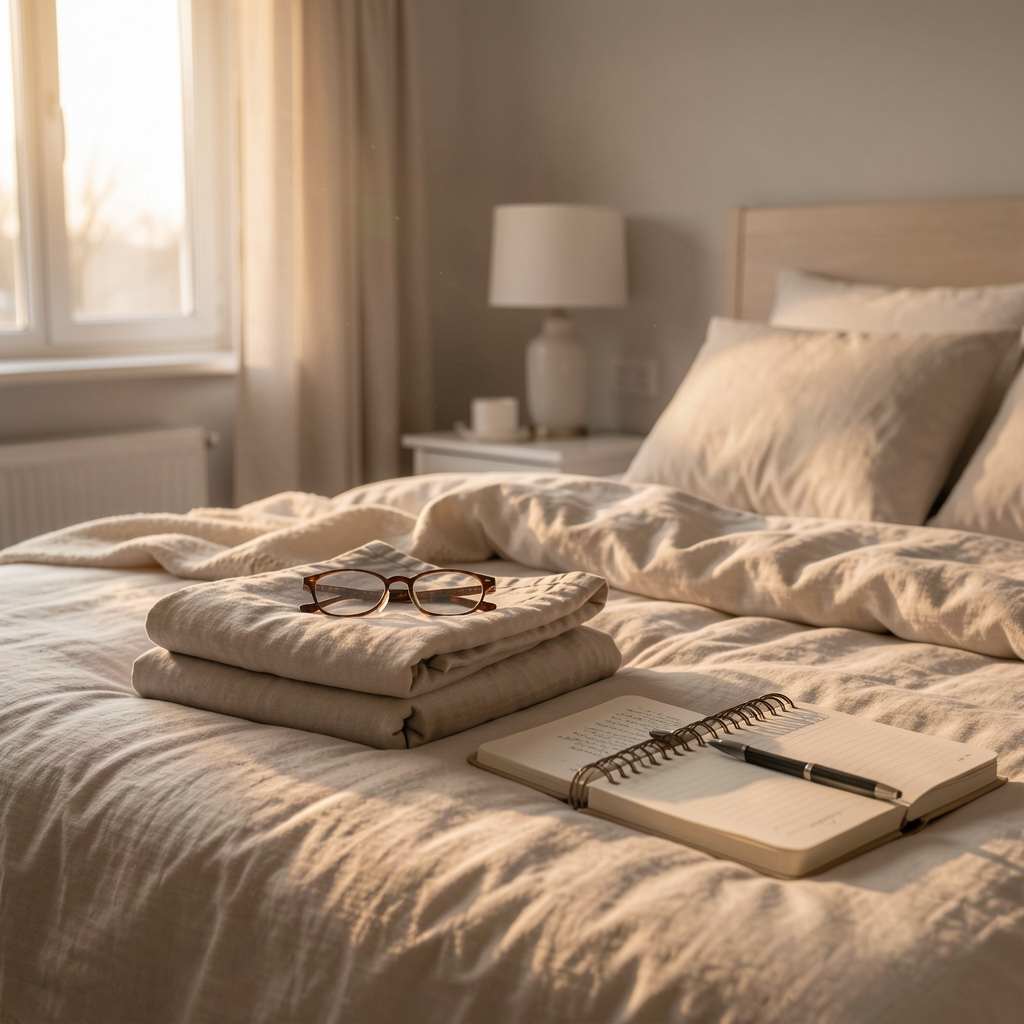
Quiet bedroom at dawn with folded linen, reading glasses and a sleep journal — Brelvan editorial

Sleep is a daily biological rhythm as well as a social experience shaped by work, family, light and technology. Research into sleep and immune response often measures short-term changes after restricted rest, while real life is more varied. This article explains what those studies can and cannot tell us, with particular attention to men balancing work, caring responsibilities and changing routines after 30.

Why sleep is studied

Sleep affects attention, mood, metabolism and many signalling systems. Researchers may compare a normal night with a shortened night or ask participants to report their usual pattern over weeks. Each method captures a different slice of experience, and a single study rarely covers every angle a reader might be curious about.

Short restriction and long patterns

A controlled experiment lasting a few nights cannot answer every question about a long-standing routine that has developed over years. Conversely, a survey can show patterns without confirming the reason behind them, since people who sleep poorly may also differ in other everyday habits. Readers should keep duration and design visible when interpreting headlines, and treat a single week of poor sleep as a different subject from a decade-long pattern.

The value of regularity

Consistent timing, a suitable sleep environment and a realistic evening routine are common subjects in wellbeing guidance. Individual circumstances vary — shift work, young children and long commutes all shape what a realistic routine looks like in practice. Persistent concerns deserve a conversation with a qualified professional rather than a general article.

Reference

How sleep stages are typically described

Public sleep education commonly separates a night into broad stages. The overview below is descriptive and general — it is not a personal assessment tool.

StageGeneral descriptionCommonly discussed role
Light sleepA transitional stage early in a sleep cycleOften discussed as the entry point into deeper stages
Deep sleepA stage associated with slower breathing and heart rateFrequently referenced in physical recovery research
REM sleepA stage associated with vivid dreamingOften studied alongside memory and mood research

Key terms

A short glossary for this article

Circadian rhythm

The roughly 24-hour internal cycle that influences alertness, body temperature and many other functions.

Sleep latency

The time it takes to fall asleep after settling down for the night, often used as one research measure.

Sleep fragmentation

Frequent brief interruptions to sleep, which researchers distinguish from simply sleeping fewer hours.

Chronotype

An individual's natural tendency toward earlier or later sleep and wake timing.

Practical framing

Building a realistic wind-down routine

These are general, commonly discussed starting points rather than a recommended by a professional plan. What works will depend on personal circumstances, and a persistent difficulty with sleep is worth raising with a GP.

  1. Set a consistent wake-up time where possible, even on days off, since timing anchors the wider daily rhythm.
  2. Reduce bright screen light in the hour before bed, since light exposure is one of several factors researchers associate with sleep timing.
  3. Keep the bedroom cool, dark and reasonably quiet, adjusting for personal preference and household circumstances.
  4. Limit caffeine later in the day, noting that individual sensitivity to caffeine varies considerably.
  5. Speak to a GP if poor sleep persists for several weeks or affects daily functioning, rather than relying on general articles alone.

Editorial note

"A single bad night rarely means very much on its own. What research tends to focus on is pattern and duration over time, which is a very different question from how tired someone feels on one particular morning."

— Editorial team, Brelvan

Key takeaways

  • Sleep studies use different measures and time frames, so headlines rarely capture the whole picture.
  • Short controlled experiments and long-term surveys answer different kinds of questions.
  • Regular timing and a suitable environment are common, general starting points discussed in wellbeing guidance.
  • Persistent sleep difficulty is best raised directly with a GP rather than addressed through general reading alone.

Common questions

Before you read further

Does one poor night affect immune signals?

Some short studies report measurable changes after restricted sleep, but findings vary and do not translate into a personal assessment.

Is more sleep always better?

Research generally focuses on adequacy and consistency rather than treating "more" as automatically better in every case.

Should I take a sleep supplement?

This article does not make product recommendations. Speak with a GP or pharmacist about any product you are considering.

A clear boundary

This article is for informational purposes only and does not constitute medical advice. Always consult your GP or a qualified healthcare professional before making changes to your diet, supplements, or lifestyle. Brelvan accepts no responsibility for actions taken without professional medical guidance.